



ReNest

Requests handled, projects delivered, in one workspace
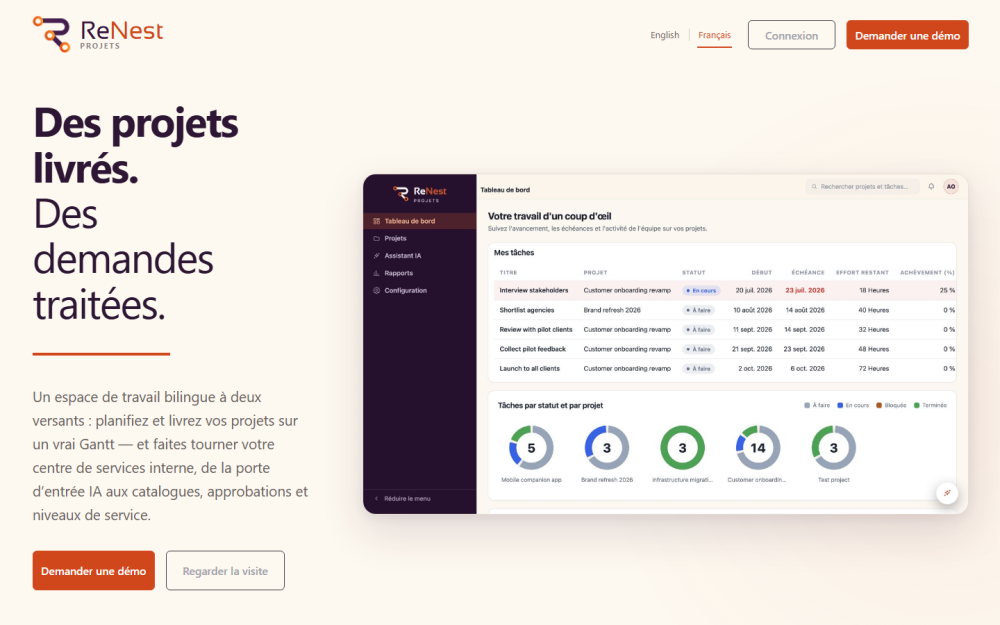
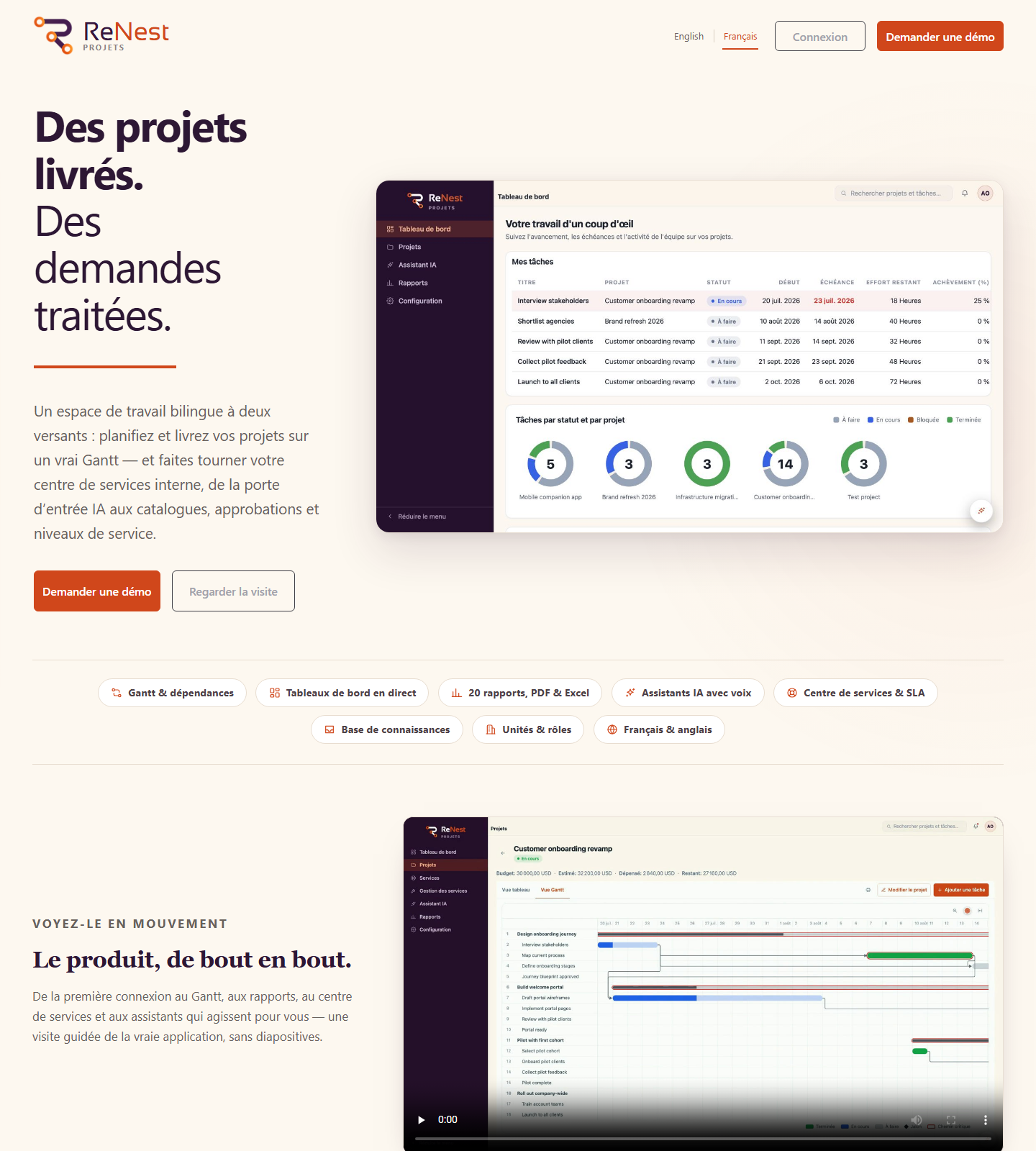
Projects delivered, requests handled. A bilingual two-sided workspace: a real Gantt to run your projects, and an internal service desk with catalogue, approvals and service levels.
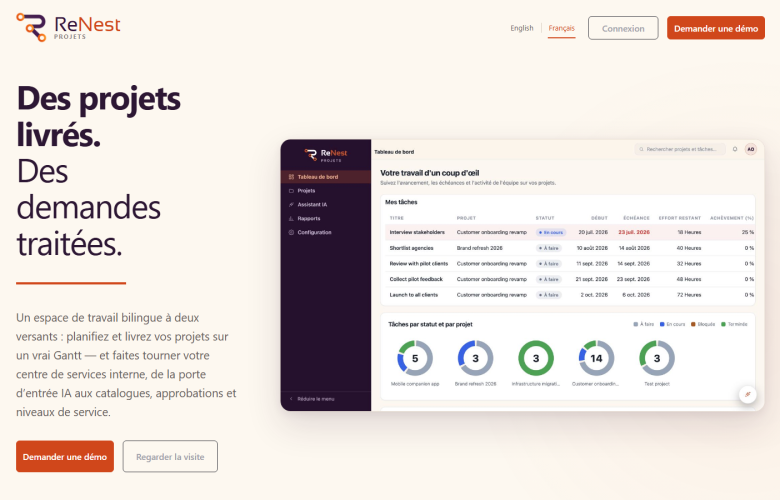
ReNest brings into one workspace what most organisations manage separately: internal requests, projects and teams. Three verbs sum up its use — ask, collaborate, steer.
The problem
Teams are working. But are requests and information actually under control?
- Scattered requests — an e-mail here, a message there, a word in the corridor.
- No traceability — no view of what is in progress, no history of what was done.
- No service commitments — SLAs exist only as intentions.
- No statistics — impossible to say how many, by whom, in how long.
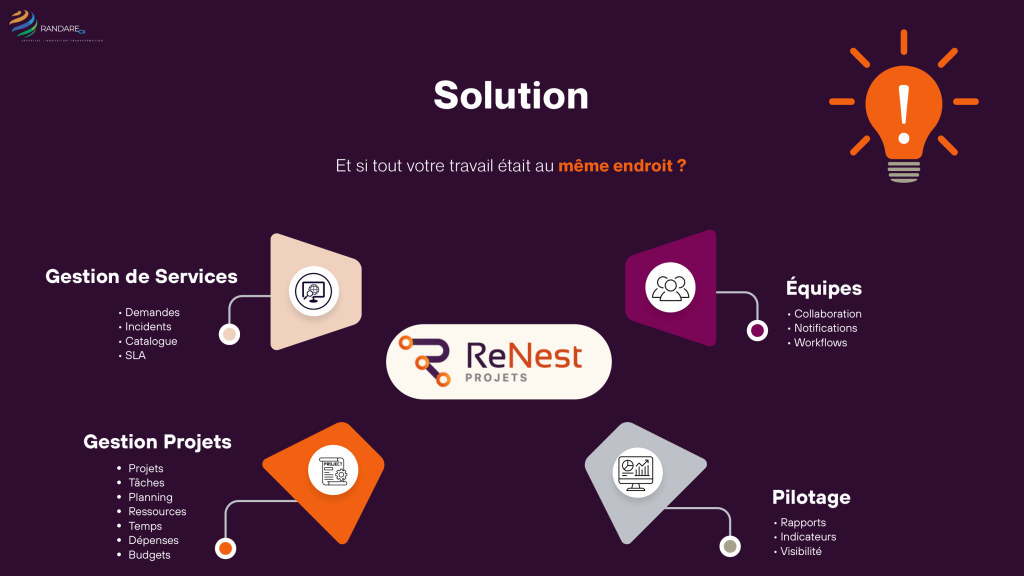
The answer: everything in one place
- Service management — requests, incidents, catalogue, SLAs.
- Project management — projects, tasks, planning, resources, time, expenses, budgets.
- Teams — collaboration, notifications, workflows.
- Steering — reports, indicators, visibility.
The employee experience
One request, one entry point, end-to-end tracking. Two paths, depending on what the person knows:
- They know which service and form to use: straight to the point.
- They do not: they describe the problem in plain language, and the assistant handles the rest.
The AI assistant
With ReNest, sometimes you just ask. The assistant draws on your service catalogue and your knowledge base: it answers when the answer already exists, and prepares the right request — form filled, team selected — when it needs to escalate.
The service catalogue
Turn internal requests into real services: incidents, software, requests, RFCs, employment documents, HR questions, interventions, equipment, maintenance, bookings.
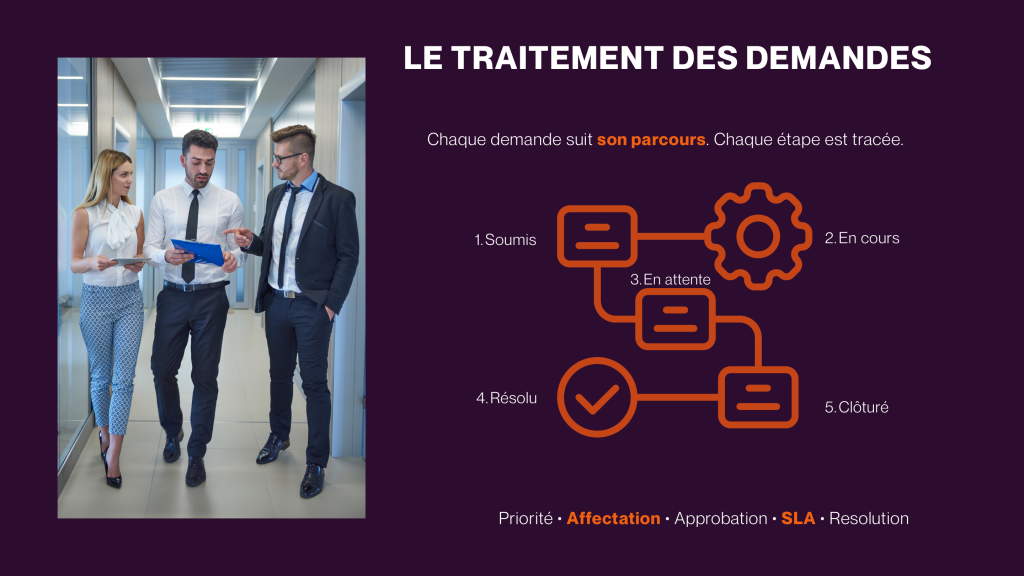
Request handling
Every request follows its path, and every step is traced: submitted → in progress → pending → resolved → closed. At each step: priority, assignment, approval, service commitment and resolution.
Project management
Run projects end to end: projects, tasks and sub-tasks, owners, dates and dependencies, progress, time and expenses.
Planning and costs
State when a task starts and how long it takes: ReNest derives the rest. The three dimensions — schedule, effort, cost — stay consistent with each other.
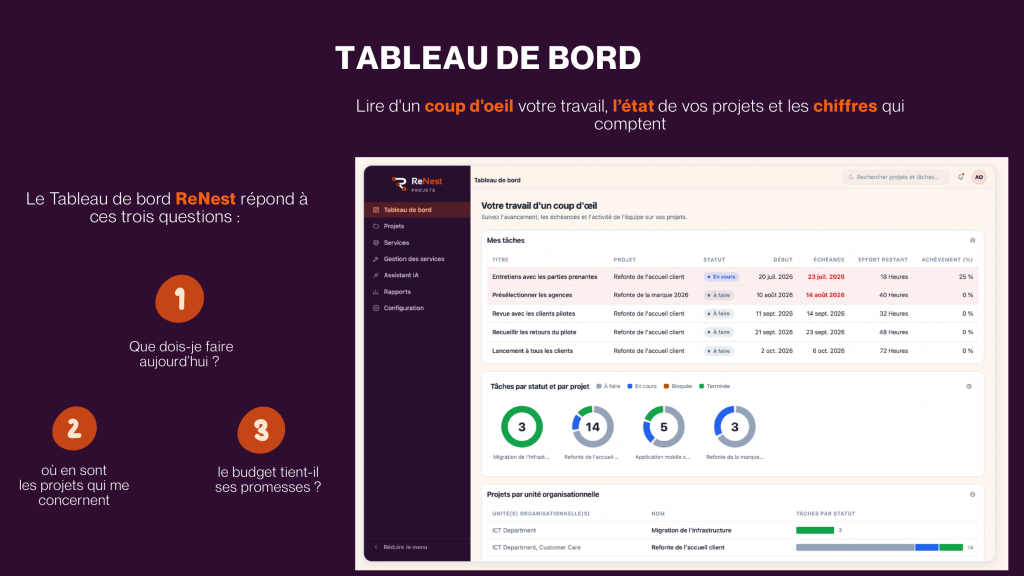
The dashboard
It answers three questions at a glance:
- What do I have to do today?
- Where do my projects stand?
- Is the budget keeping its promises?
Reporting and management view
Up to 14 reports, in two groups — project reports and service reports (overview, requests, incidents, RFCs, problems) — designed for three uses:
- Management steers decisions.
- Managers measure the work their team delivered.
- Agents see what they produced.
The mobile app, even offline
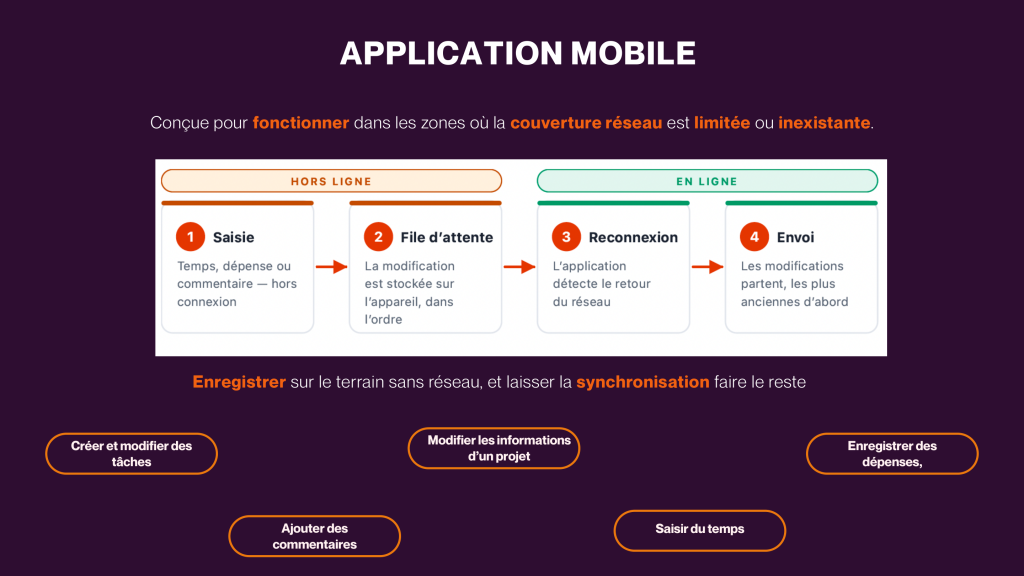
Built for areas where coverage is limited or absent. The field captures, the device queues, and synchronisation runs on its own when the network returns. On mobile: create and edit tasks, add comments, update project information, log time, record expenses.
See it on your own flows. We walk you through both sides in 30 minutes, around the way you actually work.

Let’s talk about your project. The first call is on us.
30 minutes to understand your need, tell you whether one of our platforms already answers it, and if not, estimate what a custom build would cost.